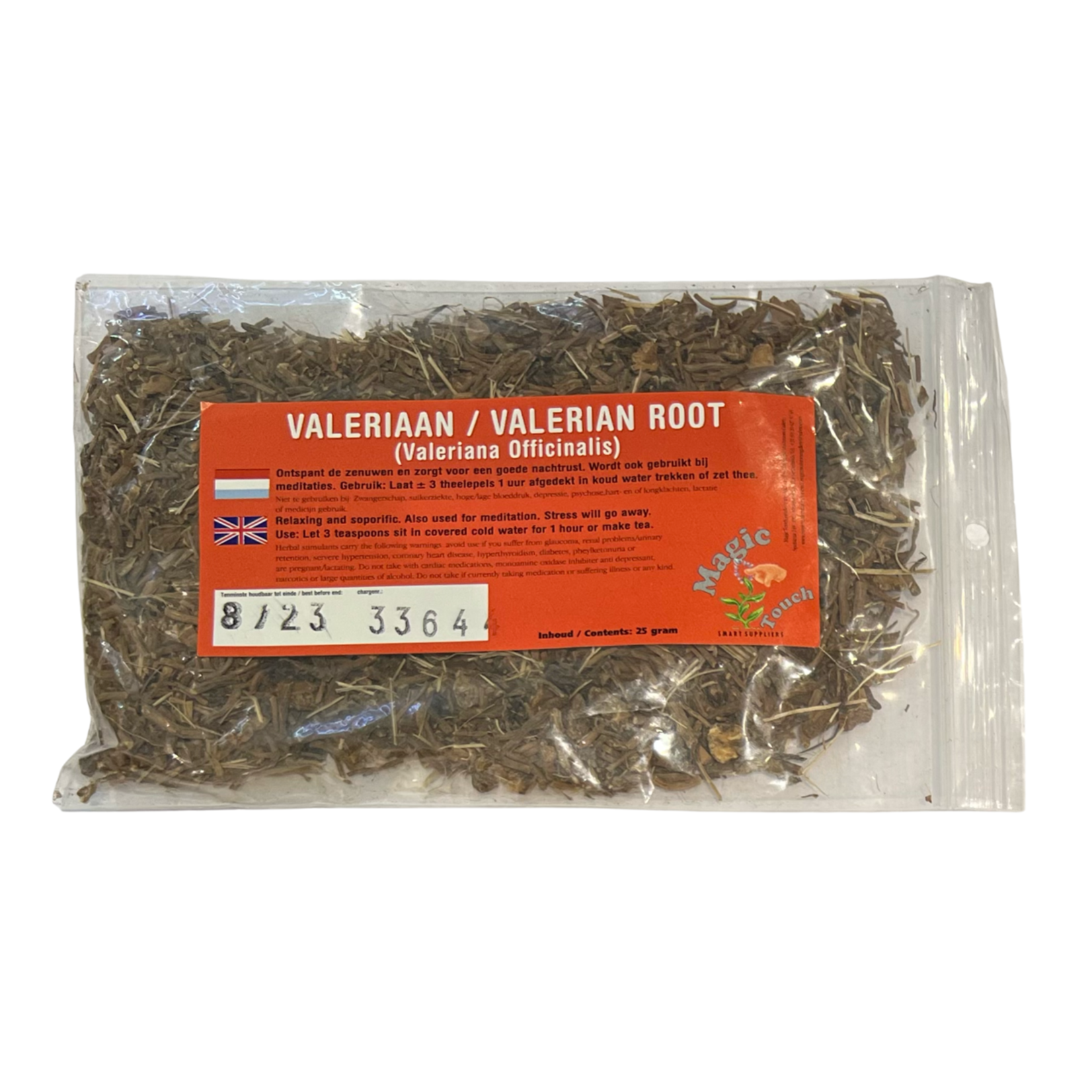
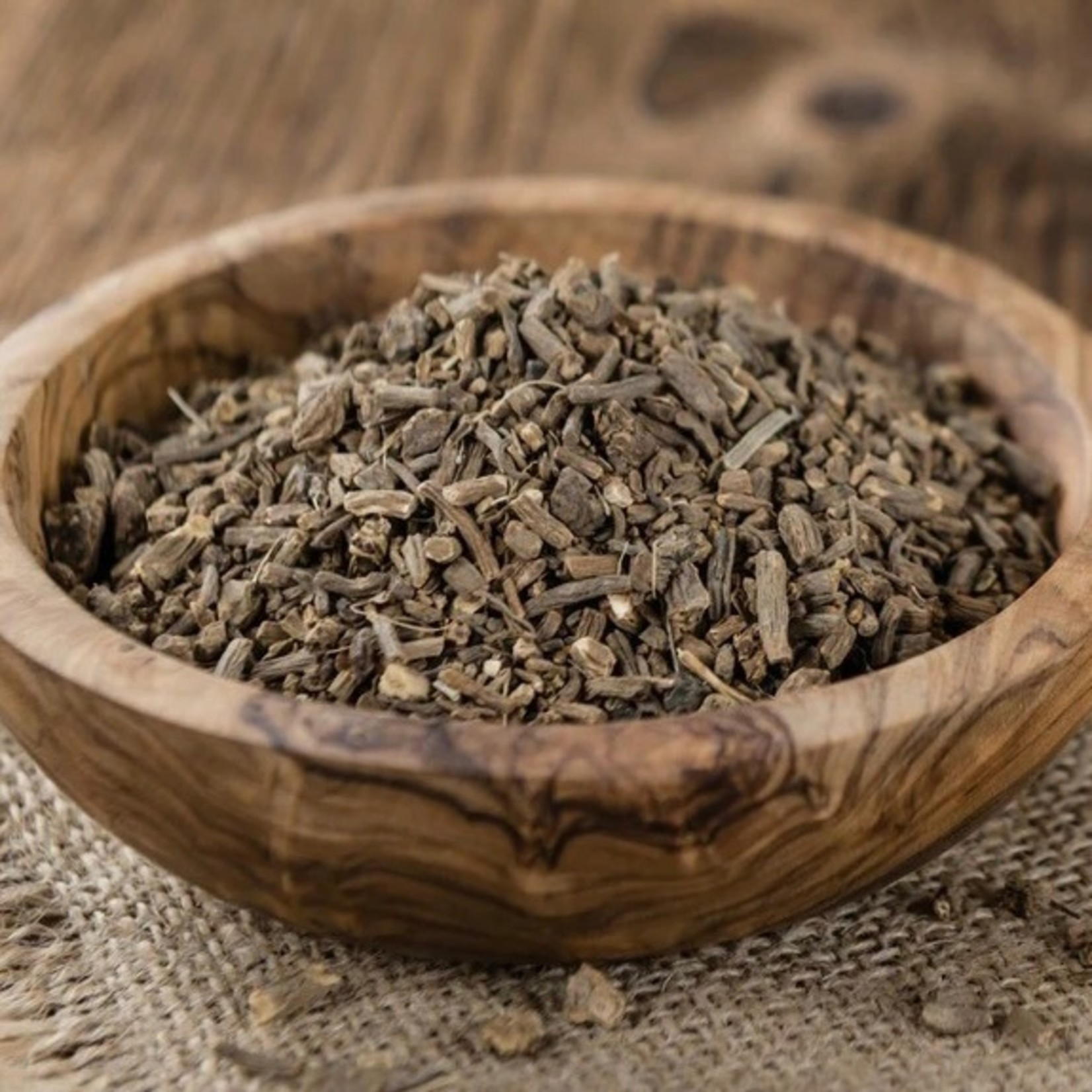
Valerian Root
Valeriana Officinalis
Usage:
- Valerian can be used as tea. Mix a few table spoons in half a litre water and let this boil gently for 5 minutes in a closed pot. This is important because the healing vapors should not escape. Let it cool down and drink it with a little honey.
- When mixed with hops (Humulus lupulus), Valerian yields a potent tea for inducing sleep.
How does it work?
- Valerian seems to act like a sedative on the brain and nervous system.
Valerian is a flowering plant. Medicine is made from the root.
Valerian is most commonly used for sleep disorders, especially the inability to sleep (insomnia). It is frequently combined with hops, lemon balm, or other herbs that also cause drowsiness. Some people who are trying to withdraw from the use of "sleeping pills" use valerian to help them sleep after they have tapered the dose of the sleeping pill. There is some scientific evidence that valerian works for sleep disorders, although not all studies are positive.
Valerian is also used for conditions connected to anxiety and psychological stress including nervous asthma, hysterical states, excitability, fear of illness (hypochondria), headaches, migraine, and stomach upset.
Some people use valerian for depression, mild tremors, epilepsy, attention deficit-hyperactivity or (ADHD), and chronic fatigue syndrome (CES).
Valerian is used for muscle and joint pain. Some women use valerian for menstrual cramps and symptoms associated with menopause, including hot flashes and anxiety.
Sometimes, valerian is added to bath water to help with restlessness and sleep disorders.
In manufacturing, the extracts and oil made from valerian are used as flavoring in foods and beverages.
Warning:
- For some people the herb has a stimulating effect instead of a relaxing one. In this case it should not be used.
- With intensive and long term use it can cause headaches and restlessness.
Side Effects:
- Valerian is LIKELY SAFE for most people when used in medicinal amounts short-term. Clinical studies have reported safe use of valerian for medicinal purposes in over 12,000 people in trials lasting up to 28 days. The safety of long-term use is unknown. Some information suggests that valerian might also be safe when taken by children for 4-8 weeks.
- Valerian can cause some side effects such as headache, excitability, uneasiness, and even insomnia in some people. A few people feel sluggish in the morning after taking valerian, especially at higher doses. It's best not to drive or operate dangerous machinery after taking valerian. The long-term safety of valerian is unknown. To avold possible side effects when discontinuing valerian after long-term use, it's best to reduce the dose slowly overa week or two before stopping completely.
Special Precautions & Warnings:
- Pregnangy or breast-feeding: There isn't enough information about the safety of valerian during pregnancy or breast-feeding. Stay on the safe side and avoid use.
- Surgery: Valerian slows down the central nervous system. Anesthesia and other medications used during surgery also affect the central nervous system. The combined effects might be harmful. Stop taking valerian at least two weeks before a scheduled surgery.
Do not use together with:
- Alcohol, Alprazolam (Xanax), Benzodiazepines, clonazepam (Klonopin), diazepam (Valium), lorazepam (Ativan), midazolam (Versed), temazepam (Restoril), triazolam (Halcion), CNS depressants, pentobarbital (Nembutal), phenobarbital (Luminal), secobarbital (Seconal), thiopental (Pentothal), fentanyl (Duragesic, Sublimaze), morphine, propofol (Diprivan), lovastatin (Mevacor), ketoconazole (Nizoral), itraconazole (Sporanox), fexofenadine (Allegra), triazolam (Halcion).