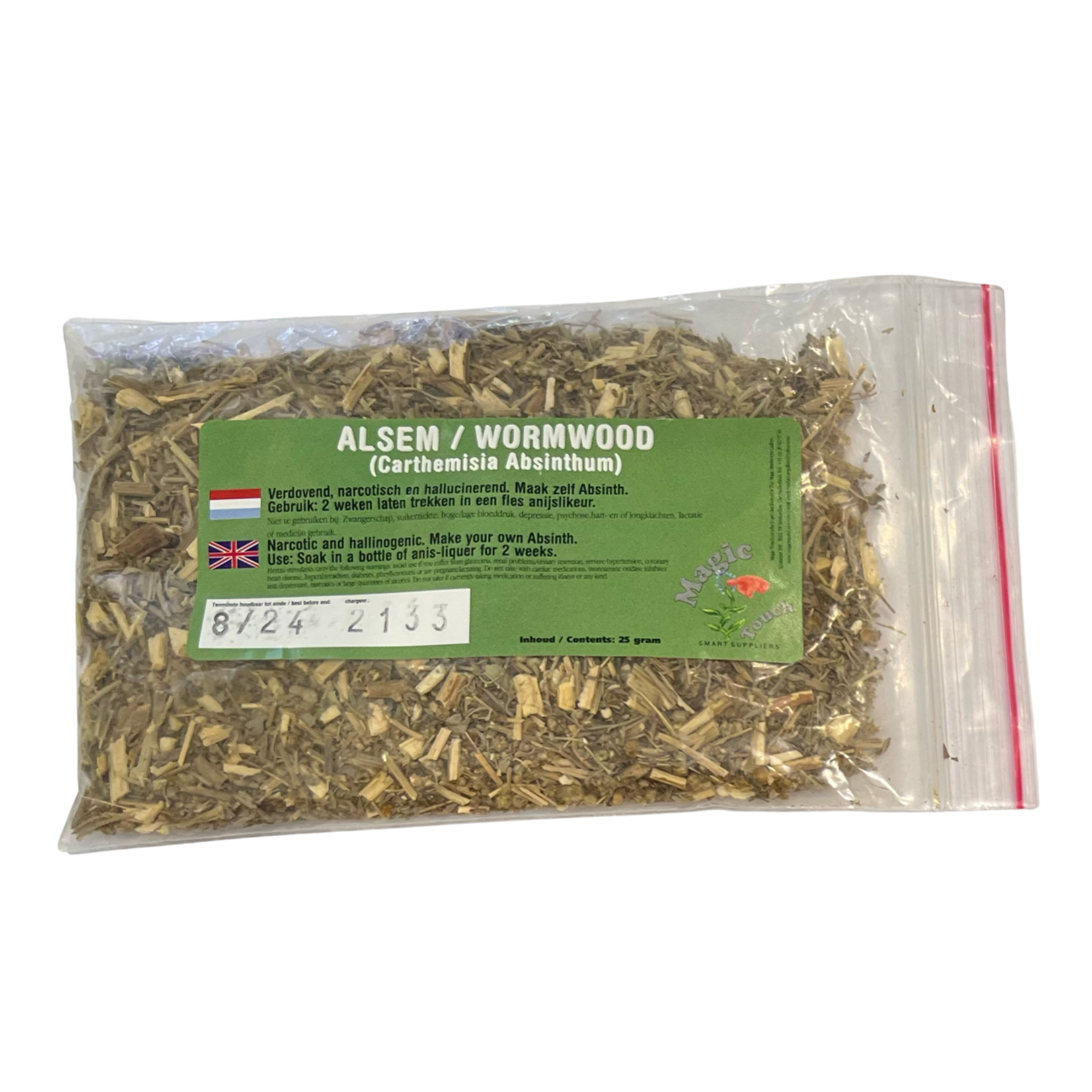
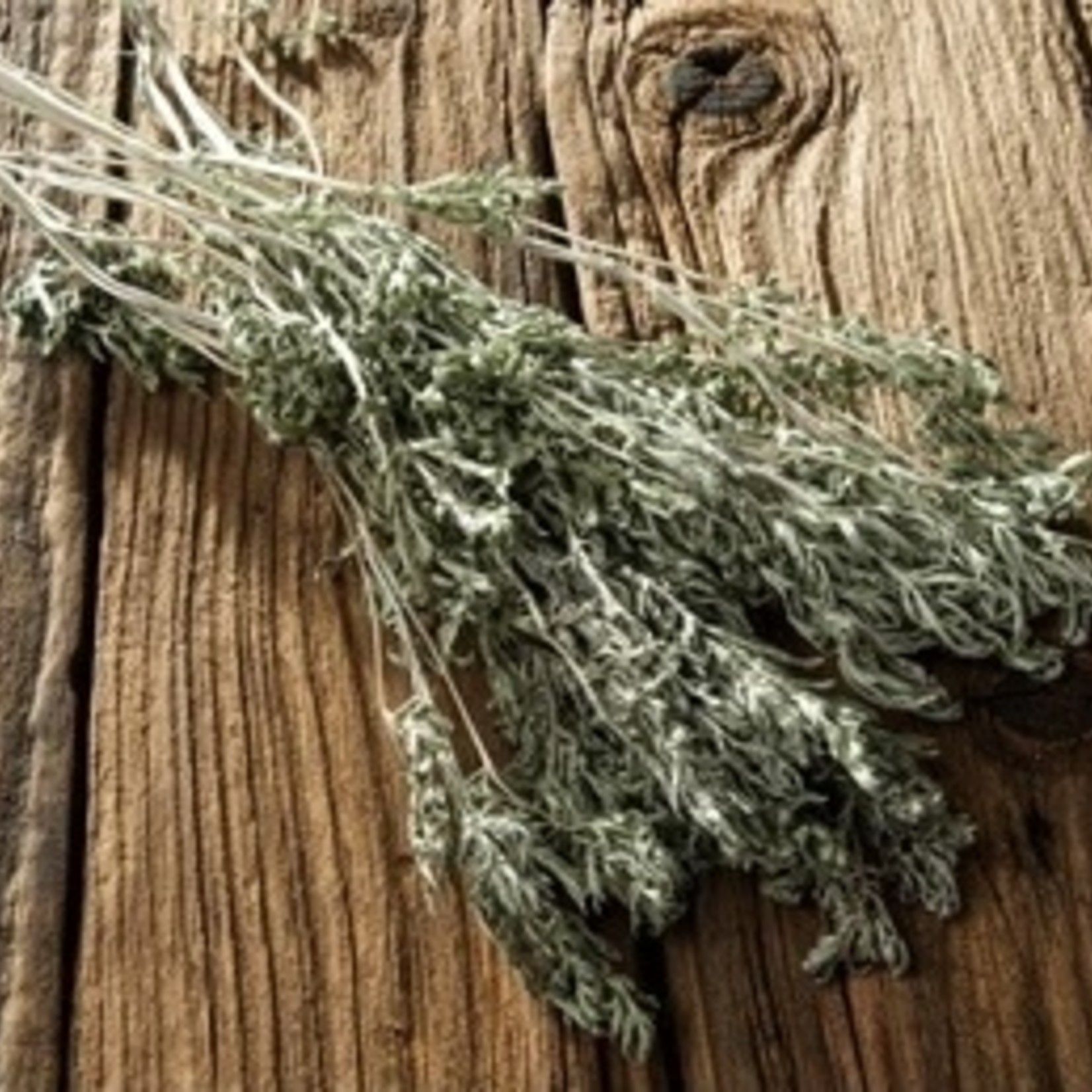
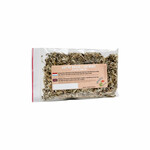
Wormwood
Artemisa Absinthium
Usage:
Tea:
- Soak 1 teaspoon in a cup of hot but not boiling water. The tea has a bitter taste, which can hardly be avoided. You can mix it with peppermint leaves or anise.
Absinthe:
- To make Absinthe, soak 40 grams (1.5 oz) of wormwood for a couple of weeks in half a liter of liquor. After sifting it, the drink ls ready for use. Take one small glass at first and wait for the effects before taking more.
How does it work?
- Wormwood oil contains thujone, which excites the central nervous system. However, it can also cause seizures and other adverse effects if the dosage is too high.
Wormwood (Artemisa Absinthium) is a plant. The above-ground plant parts and oil are used for medicine.
Wormwood is used for various digestion problems such as loss of appetite, upset stomach, gall bladder disease, and intestinal spasms. Wormwood is also used to treat fever, liver disease, and worm infections; to increase sexual desire; as a tonic; and to stimulate sweating.
Wormwood oil is also used for digestive disorders, to increase sexual desire, and to stimulate the imagination.
Some people apply wormwood directly to the skin for healing wounds and insect bites. Wormwood oil is used as a counterirritant to reduce pain.
In manufacturing, wormwood oilis used as a fragrance component in soaps, cosmetics, and perfumes. It is also used as an insecticide.
Wormwood is used in some alcoholic beverages. Vermouth, for example, is a wine beverage flavored with extracts of wormwood.
Absinthe is another wel-known alcoholic beverage made with wormwood. It is an emerald-green alcoholic drink that is prepared from wormwood oil, often along with other dried herbs such as anise and fennel. Absinthe was popularized by famous artists and writers such as Toulouse-Lautrec, Degas, Monet, van Gogh, Picasso, Hemingway, and Oscar Wilde. It is now banned in many countries, including the U.S.A.. But it is still allowed in European Union countries as long as the thujone content is less than 35 mg/kg. Thujone is a potentially poisonous molecule found in wormwood. Distilling wormwood in alcohol increases the thujone concentration.
Warning:
- Too high dosages Wormwood is poisonous. Long and intensive use can lead to addiction, as well as physical and mental harm. High dosages can give nervousness, restlessness, cramps, headaches and dizziness. An overdose may manifest as unconsciousness, coma and even worse. After making absinthe, first try one small glass and wait about an hour for the effects. Try it again at another opportunity. Better to dose too little with no effects at all than to take too much, poisoning yourself or making yourself feel sick. Do not drive (motorized) vehicles while under the influence of wormwood.
Side Effects:
- Wormwood is LIKELY SAFE when taken by mouth in the amounts commonly found in food and beverages including bitters and vermouth, as long as these products are thujone-free. Wormwood that contains thujone is POSSIBLY UNSAFE when it is taken by mouth.
- Thujone can cause selzures, muscle breakdown (rhabdomyolysis), kidney failre, restlessness, difficulty sleeping, nightmares, vomiting, stomach cramps, dizziness, tremors, urine retention, thirst, numbness of arms and legs, paralysis, and worse.
- Not enough is known to rate the safety of using wormwood topically, best to avoid.
Special Precautions & Warnings:
- Pregnangy and breast-feeding: Wormwood is LIKELY UNSAFE when taken by mouth during pregnancy in amounts greater than what is commonly found in food. The concern is the possible thujone content. Thujone might affect the uterus and endanger the pregnancy. It's also best to avoid topical wormwood, since not enough is known about the safety of applying wormwood directly to the skin.
- If you are breast-feeding, don't use wormwood until more is known about safety.
- Allergy to ragweed and related plants: Wormwood may cause an allergic reaction in people who are sensitive to the Asteraceae/Compositae family. Members of this family include ragweed, chrysanthemums, marigolds, daisies, and many others. If you have allergies, be sure to check with your healthcare provider before taking wormwood.
- A rare inherited blood condition called porphyria: Thujone present in wormwood oil might increase the body's production porphyrins. This could make porphyria worse.
- Kidney disorders; Taking wormwood oil might cause kidney failure. If you have kidney problems, talk with your healthcare provider before taking wormwood.
- Seizure disorders, including epilepsy: Wormwood contains thujone, which can cause seizures. There is concern that wormwood might make seizures more likely in people who are prone to them.
Do not use together with:
- Anticonvulsants, phenobarbital, primidone (Mysoline), valproic acid (Depakene), gabapentin (Neurontin), carbamazepine (Tegretol), phenytoin (Dilantin).