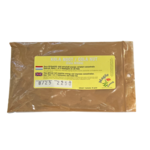
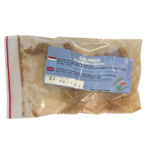
Guarana
Paullinia Cupana
Usage:
Tea or drink
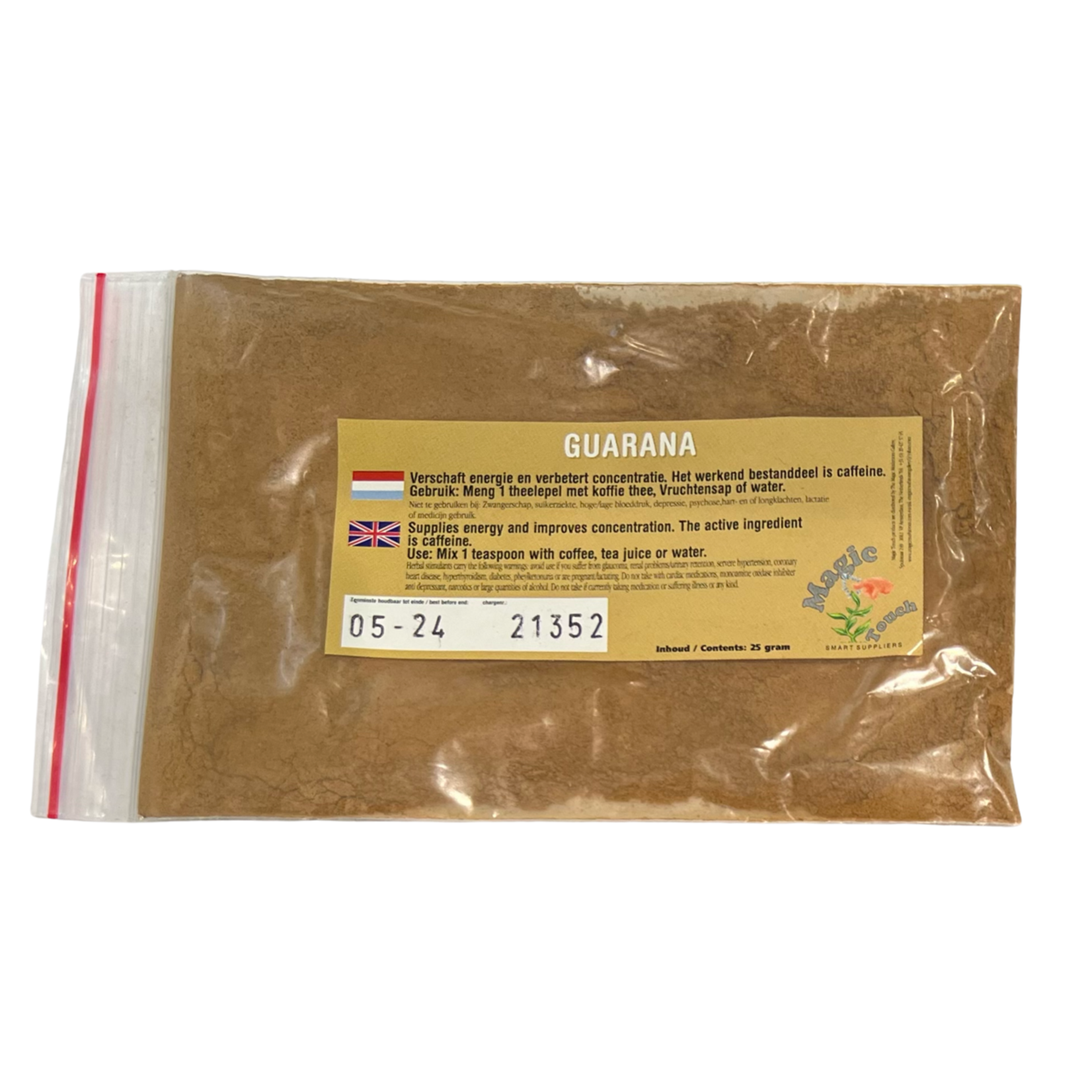
- Mix 1 teaspoon with coffee, tea, juice or water.
- This product is also available in capsules: Guarana caps
How does it work?
- Guarana contains caffeine. Caffeine works by stimulating the central nervous system (CNS), heart, and muscles. Guarana also contains theophylline and theobromine, which are molecules similar to caffeine.
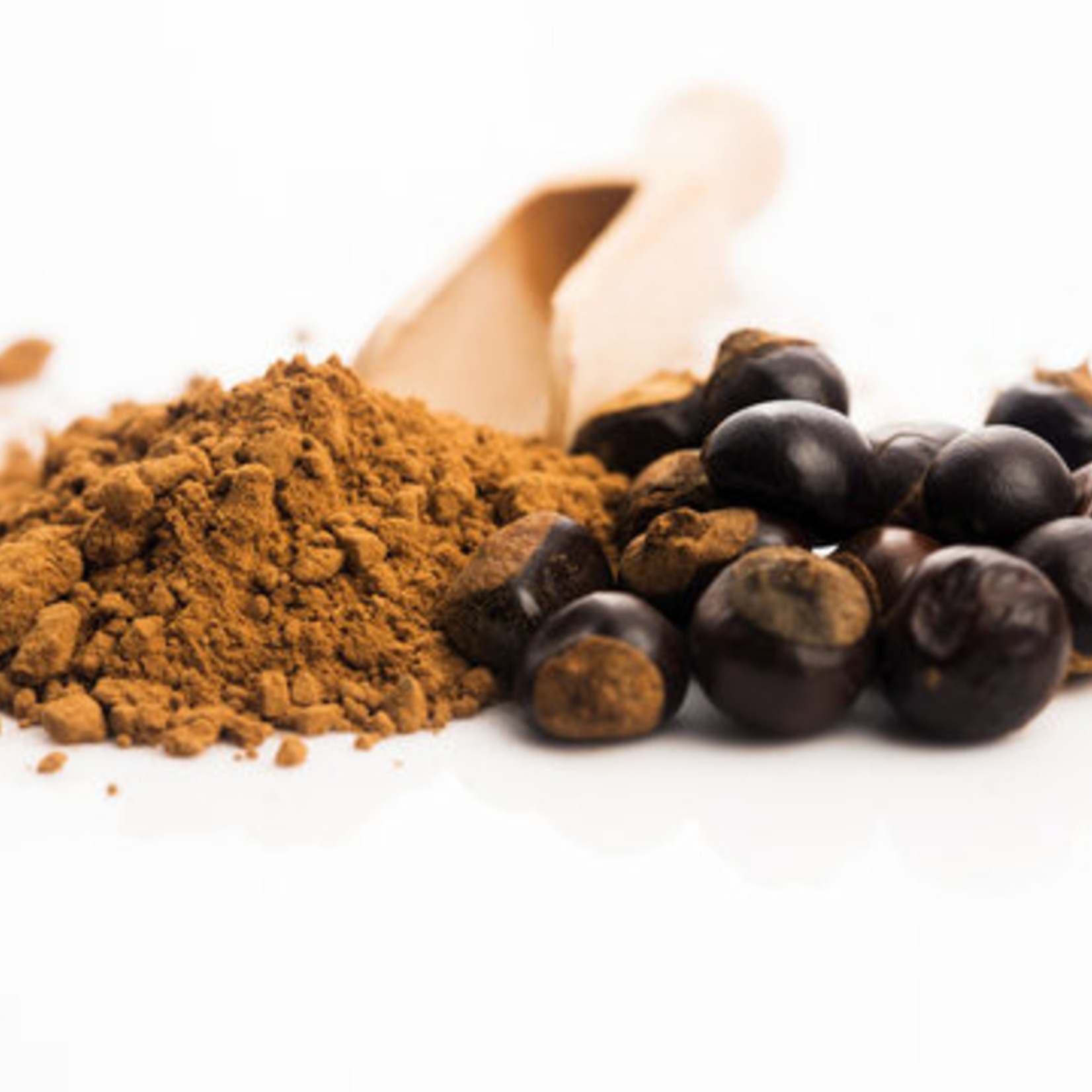
Guarana is a climbing plant named for the Guarani tribe in the Amazon, who used the seeds to brew a drink. Today, guarana seeds are still used as medicine.
Guarana is used for weight loss, to enhance athletic performance, as a stimulant, and to reduce mental and physical fatigue. It is a frequent addition to energy and weight loss products.
Some people also use guarana to treat low blood pressure and chronic fatigue syndrome (CFS), and to prevent malaria and dysentery. It is also used to enhance sexual desire, to increase urine flow, and as an astringent.
Other uses include treatment of ongoing diarrhea, fever, heart problems, headache, joint pain, backache, and heat stress.
In food manufacturing guarana has been used as a flavoring ingredient in beverages and candy.
Side Effects:
- Guarana is LIKELY SAFE for most adults when consumed in amounts commonly found in foods.
- Guarana is POSSIBLY SAFE when taken my mouth in medicinal amounts for a short time.
- Guarana is POSSIBLY UNSAFE when taking by mouth in high doses for a long time. Doses greater than 250-300 mg daily have been linked to side effects. Side effects depend on the dose. At typical doses, the caffeine in guarana can cause insomnia, nervousness and restlessness, stomach irritation, nausea, vomiting, increased heart rate and blood pressure, rapid breathing, tremors, delirium, diuresis, and other side effects. Large guarana doses might cause headache, anxiety, agitation, ringing in the ears, pain when urinating, stomach cramps, and irregular heartbeats. People who take guarana regularly may experience caffeine withdrawal symptoms if they reduce their usual amount.
- Guarana is LIKELY UNSAFE and even fatal, due to its caffeine content, when taken by mouth or injected in too high doses. The fatal dose of caffeine is estimated to be 10-14 grams (150-200 mg) per kilogram. The "typical" man weighs about 70 kilograms, s0 a lethal dose of caffeine for this man would be 10,500-14,000 mg). This is quite a high dose. Consider that one cup of brewed coffee provides from 95-200 mg of caffeine. However, serious poisoning can occur at doses lower than 150-200 mg per kilogram depending on an individual's caffeine sensitivity or smoking behavior, age, and prior caffeine use.
Special Precautions & Warnings:
- Pregnancy and breast-feeding: Guarana is POSSIBLY SAFE for pregnant and breast feeding women when taken in amounts commonly found in foods. If you are pregnant or breast-feeding. guarana should be taken with caution due to the caffeine content. Small amounts are probably not harmful. However, taking guarana in high doses by mouth is POSSIBLY UNSAFE. Consuming more than 200 mg has been linked to an increased risk of miscarriage and other negative effects.
- Anxiety: The caffeine in guarana might make feelings of anxiety worse.
- Bleeding disorders: There is some evidence suggesting that the caffeine in guarana might make bleeding disorders worse, although this has not been reported in people. If you have a bleeding disorder, check with your healthcare provider before starting guarana.
- Diatetes: Some research suggests that the caffeine in guarana may affect the way people with diabetes process sugar (glucose) and may complicate blood sugar control. There is also some interesting research that suggests caffeine may enhance the warning symptoms of low blood sugar in patients with type 1 diabetes. Some studies show that the symptoms of low blood sugar are more intense when they start in the absence of caffeine, but as low blood sugar continues, symptoms are greater with caffeine. This might increase the ability of diabetic patients to detect and treat low blood sugar. However, the downside is that caffeine might actually increase the number of low-sugar episodes. If you have diabetes, talk with your healthcare provider before starting guarana.
- Dlarrhea: Guarana contains caffeine. The caffeine in guarana, especially when taken in large amounts, can worsen diarrhea.
- Iritable bowel.syndrome (IBS): Guarana contains caffeine. The caffeine in guarana, especially when taken in large amounts, can worsen diarrhea and might worsen symptoms of IBS.
- Heart disease: The caffeine in guarana might cause irregular heartbeat in certalin people. Use with caution.
- High blood pressure: Taking guarana might raise blood pressure in people with high blood pressure due to its caffeine content. However, this effect might be less in people who are regular coffee- drinkers or otherwise use caffeine on a regular basis.
- Glaucoma: The caffeine in guarana increases the pressure inside the eye. The increase occurs within 30 minutes and lasts for at least 90 minutes after drinking caffeinated beverages.
- Osteoporosis: The caffeine in guarana can flush calcium out of the body through the kidneys. This calcium loss might help to weaken bones. To minimize this problem, don't use more than 300 mg of caffeine per day. Taking calcium supplements may also help to offset these calcium losses.
- Postmenopausal women who have a genetic problem that affects how vitamin D is used by the body should use caffeine with caution.
Do not take together with:
- Amphetamines, Cocaine, Ephedrine, Adenosine (Adenocard), Quinolone antibiotics, ciprofloxacin (Cipro), enoxacin (Penetrex), norfloxacin (Chibraxin, Noroxin), sparfloxacin (Zagam), trovafloxacin (Trovan), grepafloxacin (Raxar), Cimetidine (Tagamet), Clorapine (Clozaril), Dipyridamole (Persantine), Disulfiram (Antabuse), conjugated equine estrogens (Premarin), ethinyl estradiol, estradiol, Fluvoxamine (Luvox), Lithium, phenelzine (Nardil), tranylcypromine (Parnate), Anticoagulant & Antiplatelet drugs, Pentobarbital (Nembutal), Phenylpropanolamine, Riluzole (Rilutek), Theophylline, Terbinafine (Lamisil), Mexiletine (Mexitil), glimepiride (Amaryl). glyburide (Diaßeta, Glynase PresTab, Micronase), insulin, piloglitazone (Actos), rosiglitazone (Avandia), chlorpropamide (Dlabinese), glipizide (Glucotrol), tolbutamide (Orinase), Fluconazole (Diflucan), Verapamil (Calan, Covera, lsoptin, Verelan).